
Vacuum Valve Manufacturers in India
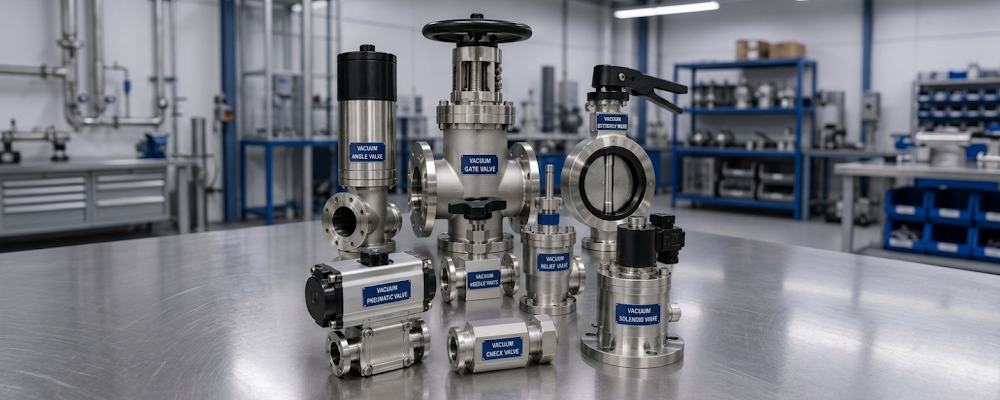
Vacuum valves are essential components in industrial systems that require controlled pressure, regulated gas flow, isolation of vacuum chambers, and reliable operation under specific process conditions. From manufacturing facilities and research laboratories to pharmaceutical production, chemical processing, and semiconductor applications, vacuum valves help maintain the operating conditions required for efficient and consistent performance.
RK Engineering Services caters to industrial requirements for vacuum valves, supporting applications that demand suitable flow control, vacuum isolation, and dependable system operation. Businesses searching for vacuum valves manufacturers in India need to consider valve design, material compatibility, pressure requirements, operating temperature, connection type, and the intended application before selecting a suitable product.
Different vacuum systems require different valve configurations. Butterfly valves, right angle valves, angular valves, gate valves, vent valves, needle valves, and mass flow controllers (MFCs) each serve specific functions within a vacuum or gas-handling setup. Understanding these components helps engineers, maintenance teams, and procurement professionals identify the right solutions for their equipment.
Whether you are setting up a new industrial vacuum system or upgrading an existing installation, choosing an appropriate vacuum valve can help improve process control, reduce unwanted leakage, and support equipment reliability.
What Are Vacuum Valves and How Do They Work?
Vacuum valves are mechanical devices used to control, isolate, admit, or regulate gases within systems operating below atmospheric pressure. Depending on the design, a valve may open or close a flow path, regulate gas admission, isolate a chamber during maintenance, or support controlled pressure changes.
Vacuum valves generally operate through a sealing mechanism that separates connected sections of a system. When the valve is open, gas can pass through the designated flow path. When it is closed, the sealing surfaces help restrict gas movement and maintain the required vacuum conditions.
The working mechanism depends on the valve type. Some valves use a rotating disc, while others use a gate, needle-shaped element, or movable sealing component. Certain applications also use electronic controls to regulate gas flow according to process requirements.
Key Functions of Vacuum Valves
- Vacuum isolation: Separates chambers, pipelines, and equipment sections when required.
- Gas flow control: Manages the movement of gases through a vacuum system.
- Pressure management: Supports controlled venting and pressure adjustment.
- Equipment protection: Helps isolate components during servicing and maintenance.
- Process consistency: Supports repeatable operating conditions in manufacturing and testing.
- System integration: Connects vacuum equipment with sensors, pumps, controllers, and gas-delivery systems.
Selecting the correct valve requires understanding the complete operating environment rather than considering the product name alone.
Why Choose RK Engineering Services for Vacuum Valves?
When evaluating vacuum valves manufacturers in India, industrial buyers need a supplier that understands the technical requirements of vacuum and gas-handling applications. RK Engineering Services can be considered for vacuum valve requirements based on the specifications of the intended installation and the products available for the application.
The right selection process should focus on product suitability, system compatibility, and operating requirements.
Important Factors to Consider
-
Application requirements: Identify whether the valve is required for isolation, venting, flow regulation, or chamber control.
-
Operating pressure: Confirm the required vacuum range and any positive-pressure conditions.
-
Material compatibility: Select suitable body and seal materials for the gases, chemicals, and process environment involved.
-
Connection dimensions: Verify the required flange, fitting, or pipeline connection.
-
Operating mechanism: Determine whether manual, pneumatic, or electrically controlled operation is appropriate.
-
Leakage requirements: Establish the permissible leakage rate for the application.
-
Maintenance needs: Consider accessibility, service intervals, seal replacement, and expected operating cycles.
For accurate product selection, buyers should share their equipment details, technical specifications, and application requirements with RK Engineering Services.
Types of Vacuum Valves Available for Industrial Applications
Different industrial processes require different valve designs. Understanding the following types helps identify the most suitable configuration for a specific vacuum system.
1. Butterfly Valves
Butterfly valves control flow through a rotating disc positioned inside the valve body. The disc turns to allow, restrict, or stop gas movement through the passage. Their relatively compact design makes them useful in installations where available space and operating convenience are important considerations.
Vacuum butterfly valves may be used in vacuum pipelines, coating equipment, industrial chambers, and other systems that require flow isolation or switching. Their suitability depends on the pressure range, sealing arrangement, disc design, and process conditions.
Applications of Butterfly Valves
-
Vacuum pipelines and ducting systems.
-
Industrial vacuum chambers.
-
Vacuum coating and surface-treatment equipment.
-
Gas-handling and process isolation arrangements.
-
Systems where compact valve construction is preferred.
Selection tip: Confirm the required conductance, sealing performance, operating pressure, and compatibility with the process gas before choosing a butterfly valve.
2. Right Angle Valves
Right angle valves are designed with inlet and outlet passages arranged at approximately 90 degrees. This configuration allows gas flow to change direction within the valve body and can simplify equipment layouts where straight-through connections are impractical.
These valves are commonly considered for vacuum systems that connect chambers, pumps, and process lines positioned at right angles. Depending on the model, the valve may use a suitable actuator or manual mechanism to control the opening and closing action.
Benefits and Applications of Right Angle Valves
-
Support compact vacuum system layouts.
-
Connect equipment positioned in different directions.
-
Provide isolation between connected vacuum components.
-
Help simplify piping arrangements in suitable installations.
-
Can be incorporated into selected laboratory and industrial vacuum equipment.
Selection tip: Check port dimensions, mounting orientation, actuator clearance, sealing specifications, and the required vacuum performance.
3. Angular Valves
Angular valves are used in vacuum and gas-handling systems where the inlet and outlet follow an angled flow path. The precise configuration depends on the valve design, and the term may overlap with right angle valve terminology in some product ranges.
They can be useful when equipment geometry requires a change in flow direction while maintaining an appropriate sealing and isolation arrangement. The correct design should be chosen according to the installation's pressure conditions and connection requirements.
Where Are Angular Valves Used?
-
Vacuum processing equipment.
-
Industrial gas-flow arrangements.
-
Vacuum chambers with angled connection points.
-
Research and testing installations.
-
Equipment requiring a specific valve-body orientation.
Selection tip: Clarify the required angle, port arrangement, flow capacity, seal type, and installation dimensions when requesting an angular valve.
4. Gate Valves
Gate valves control flow by moving a gate or closure element into or out of the flow passage. In vacuum applications, suitable gate valve designs can provide isolation between system sections while offering a large, unobstructed opening when fully open.
Depending on their construction, vacuum gate valves may be used in large chambers, industrial vacuum equipment, and systems where isolation and flow conductance are important. Some designs are engineered for particular vacuum ranges and operating cycles.
Industrial Applications of Gate Valves
-
Vacuum processing chambers.
-
Large vacuum pipeline systems.
-
Industrial coating and deposition equipment.
-
Vacuum equipment maintenance isolation.
-
Systems requiring separation between connected chambers.
Selection tip: Evaluate the valve's aperture, sealing arrangement, actuation method, cycle life, and compatibility with the required vacuum level.
5. Vent Valves
Vent valves allow gas to enter a vacuum system in a controlled manner. They are useful when a chamber must return toward atmospheric pressure or when a process requires a controlled gas admission step.
Depending on the application, venting may use atmospheric air or a specified gas. In sensitive processes, the gas source, filtration, pressure, and admission rate must be selected carefully to avoid contamination or sudden pressure changes.
Common Uses of Vent Valves
-
Controlled venting of vacuum chambers.
-
Pressure equalisation before equipment access.
-
Vacuum system shutdown procedures.
-
Maintenance and servicing operations.
-
Process cycles that require controlled gas admission.
Selection tip: Consider the vent gas, required pressure rise, contamination sensitivity, flow rate, and whether automated venting is necessary.
6. Needle Valves
Needle valves regulate flow through a narrow passage using a tapered needle-shaped element. Their design allows fine adjustments to the opening, making them useful when gradual gas-flow regulation is required.
In vacuum-related systems, an appropriately specified needle valve may help control gas admission, purge flow, or other low-flow applications. Its suitability depends on the valve's design, sealing capability, and compatibility with the operating pressure and process media.
Applications of Needle Valves
-
Fine gas-flow adjustment.
-
Vacuum system purging.
-
Laboratory gas-handling equipment.
-
Controlled gas admission.
-
Process lines requiring gradual manual regulation.
Selection tip: Check the expected flow range, adjustment sensitivity, pressure rating, sealing materials, and gas compatibility.
7. MFC – Mass Flow Controllers
A mass flow controller (MFC) is an instrument that measures and regulates the mass flow rate of a gas. Unlike a conventional isolation valve, an MFC combines flow measurement with a control mechanism to maintain a specified flow setpoint within its rated operating range.
MFCs are used in processes where repeatable and accurately regulated gas delivery is important. Depending on the model, the controller may support digital or analogue communication, electronic setpoint adjustment, and integration with automated process equipment.
Applications of Mass Flow Controllers
-
Semiconductor and electronics manufacturing.
-
Vacuum coating and thin-film processes.
-
Laboratory research and testing.
-
Gas mixing and delivery systems.
-
Chemical processing and selected industrial applications.
What Should You Check Before Selecting an MFC?
-
Gas type and gas-specific calibration.
-
Required flow range and flow units.
-
Accuracy, repeatability, and control response.
-
Inlet and outlet pressure conditions.
-
Electrical supply and communication interface.
-
Wetted-material compatibility.
-
Integration with the existing process control system.
Important distinction: An MFC is a flow-measurement and regulation device, not simply another type of on/off vacuum valve. It may be used alongside vacuum valves to achieve the required system performance.
How to Select the Right Vacuum Valve for Your Industry
Choosing the correct vacuum valve is important for maintaining suitable operating conditions, achieving reliable isolation, and supporting the intended process. The best option depends on the vacuum system design, gas characteristics, and required level of flow control.
Step-by-Step Vacuum Valve Selection Guide
Identify the Application
Determine whether the valve will be used for isolation, venting, flow adjustment, or automated gas control.
Determine the Vacuum Range
Specify the required operating pressure and ultimate vacuum level of the system.
Evaluate Process Media
Identify the gas composition and any corrosive, reactive, or contaminating substances.
Choose Suitable Materials
Verify body, seat, and seal compatibility with the process environment.
Check Flow Requirements
Consider the required conductance, flow capacity, and acceptable pressure drop.
Select the Actuation Method
Decide whether manual, pneumatic, or electrical operation is suitable for the application.
Verify System Compatibility
Confirm connection dimensions, mounting arrangements, control signals, and available installation space.
Review Maintenance Requirements
Evaluate service accessibility, seal replacement, and expected operating frequency.
RK Engineering Services can be approached with these details to help identify suitable vacuum valve options for the intended industrial application.
Industrial Applications of Vacuum Valves in India
Vacuum technology supports a wide range of industrial and scientific processes. Different industries use vacuum valves to control chamber pressure, manage gas movement, and isolate equipment during specific stages of production.
Major Industries Using Vacuum Valves
-
Pharmaceutical manufacturing: Vacuum processing, drying equipment, and selected laboratory operations.
-
Chemical processing: Vacuum systems used in suitable separation, drying, and processing applications.
-
Semiconductor manufacturing: Chamber isolation and gas-delivery control in processes requiring specialised vacuum equipment.
-
Research laboratories: Experimental vacuum chambers, testing systems, and controlled gas-flow setups.
-
Automotive manufacturing: Selected vacuum-based coating, testing, and production applications.
-
Food processing: Vacuum packaging, drying, and other processes that use vacuum technology.
-
Electronics manufacturing: Vacuum deposition and specialised production equipment.
-
Industrial coating: Vacuum chambers used for surface treatment and thin-film applications.
The operating conditions differ significantly across these sectors. A valve appropriate for one application may not be suitable for another, making technical evaluation essential.
Vacuum Valve Manufacturers in India: What Should Buyers Compare?
Businesses searching for vacuum valves manufacturers in India often need to compare technical capabilities, product suitability, supply arrangements, and after-sales support before making a purchasing decision.
Rather than choosing a valve based only on its price or general description, industrial buyers should assess the following factors:
Product Range
Check whether the required valve configuration and size are available.
Technical Documentation
Request product drawings, specifications, material details, and operating limits.
Vacuum Performance
Verify the specified leak rate and pressure range against the application requirements.
Customisation
Determine whether the supplier can accommodate the required connection, actuation, or installation configuration.
System Compatibility
Confirm that the selected valve works with the vacuum pump, chamber, piping, and control equipment.
Quality Assurance
Ask about applicable inspection procedures and relevant product certifications.
Technical Assistance
Check whether support is available for product selection, installation guidance, and maintenance queries.
Delivery and Service
Confirm lead times, spare-part availability, and service arrangements before placing an order.
For businesses evaluating vacuum valve suppliers, RK Engineering Services is a point of contact for discussing product requirements and identifying options appropriate to the intended application.
Why Proper Installation and Maintenance Matter
Even a correctly selected vacuum valve can underperform if it is installed incorrectly or maintained without following the manufacturer's instructions. Contaminated sealing surfaces, damaged seals, unsuitable operating conditions, and improper alignment can affect vacuum performance.
Recommended Maintenance Practices
-
Inspect valve sealing surfaces and accessible components at appropriate intervals.
-
Keep connection surfaces clean during installation.
-
Use compatible seals and replacement parts specified for the valve.
-
Check actuators and control connections for proper operation.
-
Monitor system pressure and investigate unexpected vacuum loss.
-
Follow the manufacturer's recommended operating and maintenance procedures.
-
Ensure that the system is safely isolated before carrying out servicing.
-
Record inspection findings and maintenance activities to identify recurring issues.
Preventive maintenance can help identify potential problems early, reduce avoidable downtime, and support consistent system performance.
Frequently Asked Questions
1. What are vacuum valves used for?
Vacuum valves control gas movement, isolate vacuum chambers, regulate gas admission, and support pressure management in systems operating below atmospheric pressure. They are used in industrial manufacturing, research laboratories, coating equipment, and various specialised processing applications.
2. Which vacuum valve types are commonly used in industrial systems?
Common types include butterfly valves, right angle valves, angular valves, gate valves, vent valves, and needle valves. Mass flow controllers (MFCs) are also used in associated gas-handling systems when accurate gas-flow measurement and regulation are required.
3. How do I choose vacuum valves manufacturers in India?
Evaluate the supplier's available product range, technical specifications, material compatibility, vacuum performance, documentation, delivery arrangements, and technical support. Provide your operating pressure, application details, connection dimensions, and required valve function before requesting a suitable product.
4. What is the difference between a butterfly valve and a gate valve?
A butterfly valve uses a rotating disc to control the flow passage, while a gate valve moves a closure element into or out of the passage. Their suitability depends on the required conductance, isolation performance, installation dimensions, and operating conditions.
5. What is the purpose of a right angle vacuum valve?
A right angle vacuum valve connects flow passages arranged at approximately 90 degrees. It can simplify system layouts and provide isolation in vacuum equipment where a change in flow direction is required.
6. What is the difference between angular valves and right angle valves?
Both terms describe valve configurations involving a change in flow direction, but the precise geometry can vary by manufacturer and product range. Buyers should confirm the specified port angle, connection arrangement, and valve design rather than assuming the terms always refer to identical products.
7. When should a vent valve be used in a vacuum system?
A vent valve is used when gas must be admitted into a vacuum chamber or when the system needs to return toward a higher pressure. The venting method should account for the required pressure change, gas quality, contamination sensitivity, and equipment limitations.
8. Can needle valves control gas flow in vacuum applications?
Yes. Suitable needle valves can provide fine manual adjustment of gas flow in compatible applications. Their performance depends on the valve design, flow range, gas properties, pressure conditions, and sealing capability.
9. What is an MFC in a vacuum system?
An MFC, or mass flow controller, measures and regulates gas mass flow according to a selected setpoint. It is commonly used in gas-delivery systems where controlled, repeatable flow is important. The appropriate model depends on gas type, flow range, pressure, and control-system compatibility.
10. Which materials are suitable for vacuum valves?
Material selection depends on the process gas, operating temperature, pressure, corrosion risk, cleanliness requirements, and sealing design. Stainless steel is used in many industrial vacuum applications, while suitable elastomers, metal seals, or other materials may be selected according to the specific service conditions.