
Vacuum Furnace
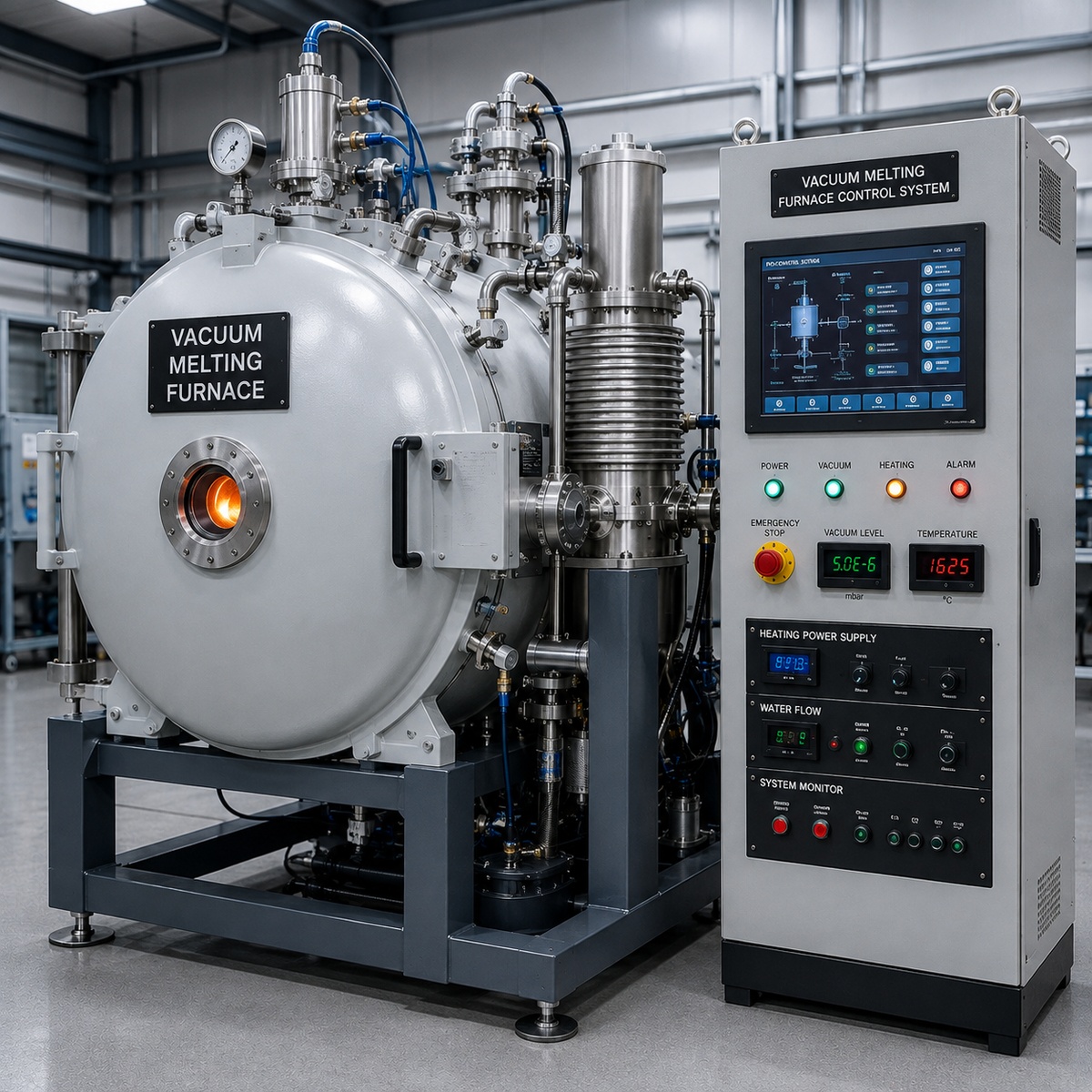
Vacuum Furnace Manufacturers in Hyderabad
Vacuum brazing, hardening, annealing and heat-treatment furnaces for aerospace, automotive, tool & die and precision manufacturing.
Looking for reliable Vacuum Furnace Manufacturers in Hyderabad for advanced industrial heating, brazing, hardening, annealing, and heat-treatment applications? Modern vacuum furnaces are designed to provide controlled heating in a vacuum or controlled-atmosphere environment, helping manufacturers achieve consistent thermal processing, improved surface quality, and repeatable results. They are widely used across aerospace, automotive, tool and die, engineering, medical, electronics, defense, and other precision manufacturing industries.
A vacuum furnace removes or significantly reduces air and other gases from the heating chamber before and during the thermal process. This controlled environment helps minimize oxidation, contamination, scaling, and unwanted chemical reactions on components. Depending on the application, vacuum furnaces can be configured for brazing, hardening, annealing, sintering, stress relieving, solution treatment, tempering, and other specialized vacuum heat treatment processes.
As experienced Vacuum Furnace Manufacturers in Hyderabad, manufacturers and suppliers can provide customized furnace solutions according to component dimensions, material type, processing temperature, heating requirements, cooling method, production volume, and automation needs.
What Is a Vacuum Furnace?
A vacuum furnace is an industrial thermal processing system that heats components inside a sealed chamber from which air and other gases are evacuated. The controlled vacuum atmosphere helps protect materials from oxidation and contamination while enabling precise temperature control throughout the heating cycle. A typical vacuum furnace consists of a vacuum chamber, heating elements, insulation system, vacuum pumping arrangement, temperature sensors, cooling system, control panel, and safety mechanisms.
Types of Vacuum Furnaces and Applications
Vacuum Brazing Furnace
A vacuum brazing furnace is designed for joining compatible metal components using a brazing filler material under controlled vacuum conditions. Since brazing takes place without direct exposure to normal atmospheric oxygen, the process can help reduce oxidation and produce clean joints. Commonly used for heat exchangers, automotive components, aerospace assemblies, stainless steel parts, carbide tools, and electronic components.
- Clean and controlled brazing environment
- Reduced oxidation and surface contamination
- Consistent heating throughout the load
- Controlled temperature ramping and soaking
- Programmable process controls
Vacuum Hardening Furnace
A vacuum hardening furnace is used for heat treating steels and other suitable alloys to obtain desired hardness, strength, wear resistance, and dimensional stability. Particularly useful for tool steels, molds, dies, precision components, cutting tools, and automotive parts where surface cleanliness and dimensional accuracy are important.
- Controlled hardening process
- Reduced oxidation and scaling
- Controlled cooling and quenching
- Repeatable heat-treatment cycles
- Helps minimize distortion when appropriately engineered and operated
Vacuum Annealing Furnaces
Vacuum annealing furnaces are used to heat materials to a specified temperature and cool them under controlled conditions to modify their metallurgical properties — relieving internal stresses, improving machinability, and modifying microstructure. Used for stainless steel, tool steel, alloy steel, copper alloys and specialty metals.
- Controlled heating and cooling
- Reduced oxidation, cleaner component surfaces
- Consistent annealing cycles
- Programmable process parameters
Vacuum Heat Treatment
Vacuum heat treatment refers to thermal processing performed in a controlled vacuum or partial-pressure environment, including hardening, annealing, tempering, solution treatment, stress relieving, aging, and brazing depending on the material and application. Common industries include aerospace, automotive, tool & die, medical equipment, defense, and gear manufacturing.
Product Features and Benefits
- Controlled Vacuum Environment: Reduces oxidation, scaling, and contamination during heating.
- Precise Temperature Control: Advanced monitoring and programmable controllers.
- Uniform Heating: Consistent temperature distribution throughout the working chamber.
- Programmable Heating Cycles: Store recipes for different materials and applications.
- Controlled Cooling: Gas quenching or other configurations per process requirements.
- Energy-efficient operation through high-quality insulation
- Repeatable processing via automated controls
- Customized chamber sizes for component/batch requirements
- Industrial durability for continuous operation
- Safety systems: interlocks, alarms, temperature and pressure monitoring
Specifications
| Max Temperature | Up to 1300°C |
| Chamber Size | 300 x 300 x 450 mm (custom available) |
| Ultimate Vacuum | 1 x 10⁻⁵ mbar |
| Heating Elements | Graphite / Molybdenum |
| Cooling | Gas quench / Water-cooled jacket |
| Control System | PLC with recipe management |
| Power Supply | 3-phase, 415V |
Why Choose Vacuum Furnace Manufacturers in Hyderabad?
Hyderabad has a strong industrial and engineering ecosystem supporting sectors such as aerospace, pharmaceuticals, automotive, electronics, defense, fabrication, and precision manufacturing. Local Vacuum Furnace Manufacturers in Hyderabad can support customers with equipment selection, furnace customization, installation, commissioning, process integration, and after-sales service — including application-specific design, vacuum-system configuration, operator training and spare-parts availability.
Interested in Vacuum Furnace Solutions?
Speak with our technical team to find the right configuration for your application.
Frequently Asked Questions
What is a vacuum furnace used for?
A vacuum furnace is used for controlled thermal processing of metals and other suitable materials. Common applications include vacuum brazing, hardening, annealing, tempering, stress relieving, sintering, solution treatment, and other vacuum heat-treatment processes.
What is the difference between a vacuum brazing furnace and a vacuum hardening furnace?
A vacuum brazing furnace is primarily configured for joining components using a brazing filler material under controlled vacuum conditions. A vacuum hardening furnace is designed for heat treatment processes that modify the hardness and mechanical properties of suitable materials.
What materials can be processed in a vacuum furnace?
Vacuum furnaces can be used for various metals and alloys, including suitable grades of tool steel, stainless steel, alloy steel, copper alloys, titanium alloys, and other engineering materials, subject to confirmed material compatibility and process parameters.
What factors should be considered when selecting a vacuum furnace?
Important factors include maximum operating temperature, working-zone dimensions, batch weight, component geometry, required vacuum level, heating-zone configuration, cooling method, gas requirements, cycle time, automation level, control system, energy consumption, and production volume.
Can vacuum furnaces be customized for industrial applications?
Yes. Vacuum furnaces can be customized for chamber dimensions, heating capacity, temperature range, vacuum pumping system, cooling method, gas backfilling, loading arrangement, automation, PLC controls, data logging, and other application-specific requirements.
You May Also Like