Vacuum Systems Manufacturers in India
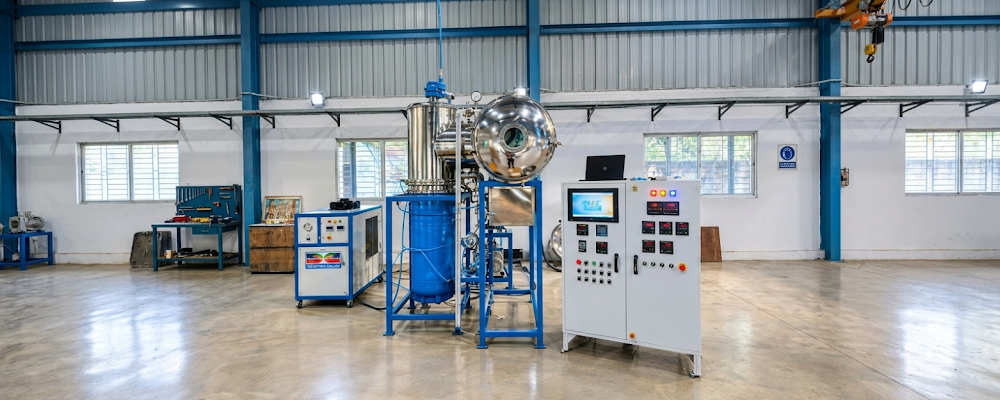
Vacuum systems play an important role in modern industrial operations, scientific research, manufacturing, testing, and specialised engineering applications. These systems are designed to create and maintain controlled low-pressure environments by removing air and other gases from an enclosed space. From industrial production facilities to research laboratories, vacuum technology supports processes that require controlled pressure, reduced contamination, and reliable operating conditions.
RK Engineering Services provides engineering solutions for vacuum system requirements, including cylindrical chambers, box type chambers, spherical vacuum chambers, and customised vacuum chambers. These chambers can be designed around the requirements of different applications, available installation space, operating conditions, and system configurations.
When searching for vacuum systems manufacturers in India, businesses need to consider more than the external dimensions of a chamber. Material selection, fabrication quality, sealing arrangements, vacuum connections, structural strength, and compatibility with the intended vacuum level are all important factors. Selecting a suitable vacuum chamber helps businesses establish a reliable foundation for their vacuum-based processes.
What Are Vacuum Systems and How Do They Work?
A vacuum system is an arrangement of equipment used to reduce the pressure inside an enclosed chamber below the surrounding atmospheric pressure. Depending on the application, a system may include a vacuum chamber, vacuum pump, valves, gauges, connecting pipes, seals, and pressure-monitoring equipment.
The operating principle is straightforward. Air and other gases are removed from the chamber using an appropriate pumping arrangement. The chamber is then maintained at the required pressure for a specific industrial, experimental, or testing process.
The main components of a vacuum system include:
-
Vacuum chamber: Provides an enclosed space for the process, product, component, or experiment.
-
Vacuum pump: Removes gas molecules to achieve the required pressure.
-
Valves and connections: Control gas flow, isolate sections, and connect the chamber to other equipment.
-
Vacuum gauges: Measure pressure inside the chamber.
-
Sealing arrangements: Help prevent unwanted air leakage through doors, joints, ports, and connections.
-
Control and monitoring equipment: Supports pressure regulation, process monitoring, and safe operation where required.
The selection of each component depends on the required vacuum level, chamber volume, gas load, operating temperature, and application. A properly planned system combines suitable chamber construction with compatible pumping and monitoring equipment.
Why Choose Vacuum Systems Manufacturers in India?
India has a broad industrial manufacturing sector serving automotive, pharmaceutical, electronics, aerospace, research, packaging, and engineering industries. Companies looking for vacuum systems manufacturers in India often require solutions that match their production requirements, technical specifications, and maintenance expectations.
Working with an experienced engineering supplier can help businesses evaluate their requirements before selecting or developing a vacuum chamber.
Important considerations include:
-
Application-based design: The chamber should suit the intended process rather than rely on a generic configuration.
-
Material suitability: Construction materials should be compatible with the operating environment, gases, temperature, and cleaning requirements.
-
Structural integrity: The chamber must be engineered for the specified pressure differential and operating conditions.
-
Leak prevention: Suitable seals, joints, and connection arrangements are essential for maintaining the required vacuum.
-
System compatibility: Chamber ports and interfaces should match the vacuum pumps, valves, instruments, and other equipment.
-
Maintenance accessibility: Doors, fittings, and service connections should support practical inspection and maintenance.
-
Customisation options: Specialised applications may require non-standard dimensions, internal fixtures, multiple ports, or specific chamber shapes.
RK Engineering Services can be approached to discuss vacuum chamber requirements and identify a configuration appropriate for a particular industrial or technical application.
Types of Vacuum Chambers Offered by RK Engineering Services
Vacuum chambers are available in different shapes and configurations to accommodate different equipment layouts, product sizes, and process requirements. Cylindrical chambers, box type chambers, spherical vacuum chambers, and customised vacuum chambers each offer distinct design considerations.
1. Cylindrical Vacuum Chambers
Cylindrical vacuum chambers are widely considered for applications that benefit from a rounded chamber body. Their geometry can provide useful structural characteristics under external atmospheric pressure when the chamber is properly engineered.
These chambers may be suitable for industrial testing, laboratory experiments, vacuum processing, component evaluation, and specialised equipment installations.
Key features and considerations:
-
Cylindrical body design for suitable vacuum applications.
-
Options for end closures, access doors, and service connections.
-
Provision for vacuum ports, gauges, and instrumentation.
-
Configurations that can accommodate different internal components.
-
Potential integration with suitable pumping and monitoring equipment.
-
Dimensions and interfaces selected according to the intended application.
Where are cylindrical vacuum chambers used?
Cylindrical chambers may be used in research facilities, material testing, industrial process development, and equipment requiring an enclosed cylindrical workspace. The final design should account for chamber diameter, length, wall thickness, opening dimensions, and the required operating pressure.
RK Engineering Services can discuss cylindrical vacuum chamber requirements based on the customer's intended use and technical specifications.
2. Box Type Vacuum Chambers
Box type vacuum chambers feature a rectangular or square enclosure. They are useful when the items being processed have flat surfaces, rectangular dimensions, or layouts that require accessible internal space.
Compared with cylindrical chambers, box type chambers can provide convenient arrangements for positioning flat components, trays, fixtures, and equipment. However, flat walls require careful structural engineering because external atmospheric pressure can produce significant loads on them.
Key features and considerations:
-
Rectangular or square chamber geometry.
-
Space for components with flat or angular profiles.
-
Door arrangements selected according to loading and unloading requirements.
-
Possible integration of internal shelves, fixtures, and mounting points.
-
Vacuum ports and instrumentation connections based on process needs.
-
Reinforcement and wall design appropriate for the specified vacuum conditions.
What are box type vacuum chambers used for?
Box type vacuum chambers may be considered for component testing, laboratory experiments, electronics-related processes, product evaluation, and specialised industrial operations. The actual suitability depends on the process, component dimensions, cleanliness requirements, and desired vacuum level.
For businesses requiring a practical internal layout, RK Engineering Services can help assess the dimensions, access arrangements, and technical features required for a box type vacuum chamber.
3. Spherical Vacuum Chambers
Spherical vacuum chambers have a rounded, sphere-like internal enclosure. Spherical geometry can distribute pressure-related stresses efficiently when the structure, joints, and openings are appropriately designed.
These chambers may be considered for specialised research, scientific experiments, vacuum testing, and applications where a spherical internal volume offers functional advantages.
Key features and considerations:
-
Spherical chamber geometry.
-
Potentially efficient distribution of structural stresses.
-
Ports and connections positioned according to equipment requirements.
-
Design considerations for access openings, seals, and instrumentation.
-
Compatibility with the required pumping arrangement and operating pressure.
-
Fabrication and inspection requirements based on the intended service.
When should you consider a spherical vacuum chamber?
A spherical chamber may be appropriate when the application benefits from a rounded enclosure, a particular internal volume, or specialised scientific and engineering arrangements. Its suitability must be evaluated against practical factors such as access, internal component placement, fabrication complexity, and connection locations.
RK Engineering Services can discuss the feasibility of spherical vacuum chamber configurations according to the application and the customer's design requirements.
4. Customised Vacuum Chambers
Not every vacuum application can be accommodated by a standard chamber shape or size. Customised vacuum chambers are developed around specific operating conditions, component dimensions, equipment interfaces, and process objectives. A customised design may combine features from cylindrical or box type chambers or use another configuration suited to the application. The goal is to develop an enclosure that works with the customer's equipment and process requirements.
Customisation options may include:
-
Special chamber dimensions and internal volumes.
-
Application-specific body shapes and access arrangements.
-
Multiple vacuum ports and service connections.
-
Instrumentation openings and mounting provisions.
-
Internal fixtures, supports, or component positioning arrangements.
-
Suitable material and surface-finish specifications.
-
Interfaces for pumps, valves, gauges, and other equipment.
-
Design considerations for temperature, gas compatibility, and cleaning.
-
Special requirements for inspection, testing, and documentation.
Why choose a customised vacuum chamber?
A customised chamber can help address space limitations, unusual component geometries, specialised testing procedures, or equipment integration requirements. However, customisation should begin with clear technical specifications rather than dimensions alone.
Customers should provide the intended application, required vacuum pressure, chamber volume, operating temperature, materials or gases involved, and interface requirements. These details help the engineering team assess the feasibility of the proposed configuration.
RK Engineering Services can be contacted to discuss customised vacuum chamber requirements and identify the design information needed to move towards a suitable engineering solution.
Which Industries Use Vacuum Systems?
Vacuum systems support a wide range of industrial and technical activities. The chamber design and supporting equipment vary according to the process, product, and required operating environment.
Common application areas include:
1. Manufacturing and Industrial Engineering
Vacuum systems can support specialised manufacturing processes, component testing, material evaluation, and equipment development. The appropriate chamber depends on the size and nature of the components being processed.
2. Research and Development
Research laboratories use vacuum chambers for controlled experiments, prototype evaluation, and studies involving reduced-pressure environments. Suitable instrumentation and reliable pressure monitoring are important for repeatable results.
3. Electronics and Electrical Engineering
Certain electronics and electrical engineering processes require controlled environments for testing, component evaluation, or specialised processing. Chamber cleanliness, connections, and process compatibility must be considered.
4. Automotive and Aerospace Engineering
Vacuum equipment may be used for testing selected components, evaluating materials, and supporting specialised research or production processes. Applications with demanding operating conditions require appropriate design verification.
5. Pharmaceutical and Chemical Industries
Vacuum technology is used in selected processes involving reduced pressure, drying, degassing, or material handling. The chamber materials and seals must be compatible with the substances, cleaning procedures, and process conditions involved.
6. Material Testing and Quality Control
Vacuum chambers can provide a controlled environment for testing materials, assessing product performance, and conducting specialised quality-control procedures. The test method determines the required chamber configuration and measurement equipment.
The use of a vacuum chamber in any industry should be determined by the actual process requirements and the suitability of the complete system.
How to Select the Right Vacuum Chamber Manufacturer in India
Choosing a vacuum chamber manufacturer is an important step in developing an effective vacuum system. A chamber that does not match the intended pressure, application, or equipment connections can create operational difficulties and additional costs.
Consider the following points before finalising a supplier:
-
Define the application: Explain what the chamber will be used for and what needs to be placed inside it.
-
Specify the vacuum level: State the target pressure and whether the system needs to operate continuously or intermittently.
-
Confirm the dimensions: Provide internal dimensions, usable volume, door size, and available installation space.
-
Select appropriate materials: Consider corrosion resistance, process gases, temperature, cleaning, and product compatibility.
-
Review the chamber geometry: Decide whether a cylindrical, box type, spherical, or customised design best suits the application.
-
Identify required connections: List the number, size, and location of vacuum ports, gauges, valves, and service interfaces.
-
Discuss leakage and testing requirements: Clarify the expected leak-rate criteria and any inspection or acceptance tests.
-
Check equipment compatibility: Ensure the chamber interfaces match the proposed pump and associated equipment.
-
Review maintenance needs: Consider access for cleaning, seal replacement, inspection, and repairs.
-
Confirm documentation: Ask about drawings, material specifications, inspection records, and other documentation required for the project.
A detailed technical discussion before fabrication can help reduce design changes and improve the likelihood that the completed chamber meets its intended requirements.
What Makes RK Engineering Services a Suitable Choice for Vacuum Chamber Requirements?
Selecting an engineering supplier involves evaluating the fit between the proposed solution and the customer's technical needs. RK Engineering Services can be approached for discussions regarding vacuum chamber configurations and application-specific requirements.
Customers looking for vacuum systems manufacturers in India should evaluate the proposed design, construction details, technical compatibility, inspection provisions, and project requirements before making a decision.
When discussing a vacuum chamber project with RK Engineering Services, customers can share:
-
The intended industrial or laboratory application.
-
Required chamber type and dimensions.
-
Target operating pressure or vacuum range.
-
Material and surface-finish preferences.
-
Required openings, ports, doors, and connections.
-
Pumping, instrumentation, and equipment interface requirements.
-
Operating temperature and environmental conditions.
-
Inspection, testing, and documentation expectations.
These details provide a starting point for understanding the application and evaluating an appropriate vacuum chamber solution. Specific capabilities, manufacturing timelines, materials, and testing services should be confirmed directly with the company before placing an order.
What Are the Benefits of a Properly Designed Vacuum Chamber?
A properly engineered vacuum chamber helps create a controlled environment for the intended process. Its performance depends on design quality, manufacturing accuracy, sealing, compatible equipment, and appropriate operating practices.
Important benefits may include:
Controlled Pressure Conditions
Supports processes that require a reduced-pressure environment.
Application-Specific Configuration
Accommodates particular product dimensions and equipment layouts.
Equipment Integration
Allows appropriate connections for pumps, valves, gauges, and instruments.
Repeatable Process Conditions
Supports consistent operation when the chamber and complete system are correctly specified and maintained.
Practical Access
Suitable doors and openings can simplify loading, unloading, cleaning, and inspection.
Long-Term Serviceability
Appropriate materials, construction, and maintenance planning can help support dependable use.
These benefits are not automatic. They depend on correct engineering, manufacturing, installation, maintenance, and operation according to the chamber's design limits.
Why Is Vacuum Chamber Quality Important?
Vacuum chambers can experience substantial loads because the pressure inside the enclosure may be lower than atmospheric pressure outside. The resulting forces make structural design, material selection, joints, doors, and openings particularly important.
Important quality considerations include:
-
Appropriate engineering calculations for the intended pressure conditions.
-
Suitable wall thickness and reinforcement, especially for flat surfaces.
-
Properly designed joints, flanges, doors, and sealing arrangements.
-
Compatible materials and seals for the operating environment.
-
Appropriate inspection and leak testing against specified acceptance criteria.
-
Safe operation within the designed pressure, temperature, and service limits.
For demanding applications, design review and testing should be performed according to applicable engineering requirements and relevant standards. Users should not assume that a chamber is suitable for a particular vacuum level without supporting design information.
How to Request a Vacuum Chamber from RK Engineering Services
Businesses planning to purchase a vacuum chamber should prepare a concise technical requirement before requesting a quotation. Clear information helps the supplier understand the application and determine which details need further engineering review.
Follow these steps:
-
Describe the application: Explain the process, product, or experiment.
-
Choose a chamber type: Identify whether you need a cylindrical chamber, box type chamber, spherical vacuum chamber, or customised vacuum chamber.
-
Share technical dimensions: Provide the required internal dimensions and available installation space.
-
Specify operating conditions: Include the target pressure, temperature, gases, and expected duty cycle.
-
List connections and accessories: Identify vacuum ports, gauges, valves, doors, fixtures, and equipment interfaces.
-
Discuss inspection requirements: Explain any leak testing, documentation, or quality checks needed.
-
Confirm the scope of supply: Clarify whether the requirement is for a chamber alone or a complete vacuum system.
Contact RK Engineering Services with these details to discuss your vacuum chamber requirements and request information about a suitable configuration.
Frequently Asked Questions
1. What do vacuum systems manufacturers in India provide?
Vacuum systems manufacturers and engineering suppliers may provide vacuum chambers, pumping equipment, valves, gauges, connections, and integrated systems, depending on their capabilities. Customers should confirm the exact scope of design, manufacturing, supply, installation, and testing offered by the selected company.
2. What types of vacuum chambers are available from RK Engineering Services?
The chamber configurations relevant to this requirement include cylindrical chambers, box type chambers, spherical vacuum chambers, and customised vacuum chambers. The appropriate option depends on the intended application, required dimensions, operating pressure, and equipment connections.
3. What is the difference between cylindrical and box type vacuum chambers?
Cylindrical chambers have a rounded body and can offer favourable structural characteristics under external pressure when properly engineered. Box type chambers provide rectangular internal space that may be convenient for flat or angular components, but their flat walls require careful structural design.
4. What are spherical vacuum chambers used for?
Spherical vacuum chambers may be used in specialised research, scientific experiments, vacuum testing, and other engineering applications that benefit from a spherical enclosure. Their final suitability depends on the process, access requirements, chamber volume, and operating conditions.
5. Can vacuum chambers be customised for specific industrial applications?
Yes, customised vacuum chambers can be designed around application-specific dimensions, openings, ports, materials, fixtures, and equipment interfaces. The feasibility of each feature depends on the required vacuum level, structural design, and manufacturing constraints.
6. How do I choose the right vacuum chamber size?
Consider the size of the component or product, the required working clearance, internal fixtures, chamber volume, door opening, and installation space. Also account for any connections or instruments that occupy internal or external space.
7. Which materials are suitable for vacuum chambers?
Material selection depends on the operating pressure, temperature, gases, corrosion exposure, cleanliness requirements, and process compatibility. Stainless steel and other engineering materials may be considered where appropriate, but the final choice should be based on the application and design specifications.
8. How do vacuum chambers maintain low pressure?
Vacuum pumps remove gas from the chamber. Properly designed seals, joints, doors, and connections help limit unwanted gas entry, while vacuum gauges monitor the pressure. The achieved pressure depends on the pump, chamber volume, leakage, outgassing, and system configuration.
9. What information is needed to request a vacuum chamber quotation?
Provide the chamber type, dimensions, target vacuum level, operating temperature, material requirements, connection details, intended application, and any inspection or testing requirements. Drawings or reference specifications can help clarify the design.
10. Why should businesses evaluate vacuum chamber manufacturers carefully?
The chamber must be suitable for the required pressure conditions and compatible with the intended process. Evaluating engineering design, material selection, sealing, inspection, documentation, and equipment integration helps businesses make a more informed purchasing decision.