Vacuum Glove Box Manufacturers in India
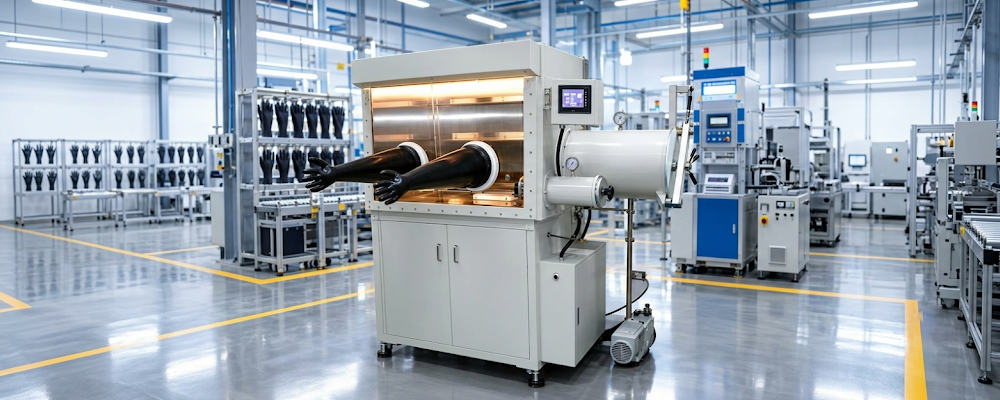
Vacuum glove boxes are specialized enclosures designed to provide a controlled working environment for handling sensitive materials, conducting laboratory experiments, and performing industrial processes. These systems help protect materials from exposure to atmospheric oxygen, moisture, dust, and other external contaminants. They are particularly useful in industries where maintaining a controlled atmosphere is essential for product quality, process safety, and experimental accuracy.
RK Engineering Services provides engineering solutions for industrial and laboratory requirements, including equipment associated with controlled-atmosphere applications. For organizations searching for Vacuum Glove Box Manufacturers in India, selecting a suitable system involves evaluating enclosure design, vacuum performance, atmosphere control, material compatibility, and the requirements of the intended application.
Vacuum glove boxes are commonly used in research laboratories, pharmaceutical development, electronics manufacturing, chemical processing, battery research, and advanced material testing. Depending on the application, they can be configured to support vacuum operations, inert gas environments, or controlled gas handling. Understanding these options helps businesses choose equipment that meets their operational needs.
What Is a Vacuum Glove Box?
A vacuum glove box is an enclosed workspace that allows an operator to handle materials through integrated gloves while reducing direct exposure to the surrounding atmosphere. Depending on the system design, the enclosure can be evacuated to remove air before being filled with a selected gas or maintained under specified vacuum conditions.
The main purpose of a vacuum glove box is to create a controlled environment for processes that require isolation from external conditions. Some materials react with oxygen or moisture, while others may become contaminated when exposed to ordinary room air. A properly designed glove box helps minimize these risks.
Key components of a vacuum glove box include:
-
Sealed enclosure: Provides a barrier between the internal workspace and the surrounding environment.
-
Glove ports and gloves: Allow operators to manipulate materials without opening the enclosure.
-
Transfer chamber: Supports the movement of materials into and out of the main chamber while minimizing atmospheric contamination.
-
Vacuum connections: Allow air or other gases to be removed when the process requires evacuation.
-
Gas inlet and outlet connections: Enable controlled gas filling, purging, or atmosphere replacement.
-
Viewing window: Provides visibility of the work area during operation.
-
Pressure and atmosphere monitoring: Helps operators monitor operating conditions when suitable instruments are installed.
The exact configuration depends on the required pressure range, working volume, gas composition, and intended application.
Types of Glove Boxes Available for Industrial and Laboratory Applications
Different processes require different levels of atmospheric control. Understanding the distinctions between vacuum glove boxes, inert glove boxes, and gas glove boxes helps businesses select appropriate equipment.
1. Vacuum Glove Boxes
Vacuum glove boxes are designed for applications involving air evacuation, controlled pressure conditions, or preparation of an enclosure before introducing another gas. Their configuration depends on whether the process requires partial evacuation, repeated evacuation and filling, or operation under a specified vacuum.
Typical applications include:
-
Handling moisture-sensitive and oxygen-sensitive materials.
-
Preparing samples for laboratory analysis.
-
Conducting specialized chemical experiments.
-
Supporting material research and development.
-
Preparing components for controlled-atmosphere processing.
-
Performing selected electronics and battery research procedures.
When choosing a vacuum glove box, users should assess chamber volume, achievable pressure, leak tightness, pump compatibility, and the chemical compatibility of seals and internal components.
2. Inert Glove Boxes
Inert glove boxes are enclosures designed to maintain an atmosphere containing a suitable inert gas, such as nitrogen or argon. These gases can help prevent unwanted reactions between sensitive materials and atmospheric oxygen or moisture.
Inert glove boxes are commonly considered for:
-
Battery material preparation and research.
-
Handling reactive chemicals and metal powders.
-
Laboratory synthesis involving air-sensitive compounds.
-
Advanced materials research.
-
Electronics and component assembly.
-
Sample preparation for specialized testing.
The required gas depends on the material being handled and the process conditions. For example, some applications use nitrogen, while others require argon because of material-specific reactivity or process constraints.
An inert glove box may include gas purification equipment, oxygen and moisture monitoring, circulation systems, and a transfer chamber. These features are selected according to the cleanliness and atmosphere specifications of the application.
3. Gas Glove Boxes
Gas glove boxes are designed to support operations that require a controlled internal gas environment. Depending on their configuration, these systems may allow gas introduction, atmosphere replacement, controlled circulation, or monitoring of selected gas parameters.
Gas glove boxes can be useful in:
-
Chemical research laboratories.
-
Material development facilities.
-
Pharmaceutical research environments.
-
Industrial testing applications.
-
Specialized sample preparation.
-
Processes requiring controlled gas exposure or exclusion.
The term gas glove box can describe different configurations, so buyers should clearly define the intended gas, pressure conditions, operating procedure, and safety requirements before selecting a system.
For applications involving hazardous, flammable, corrosive, or toxic gases, the enclosure must be engineered with suitable gas handling, ventilation, detection, exhaust treatment, and other necessary protective measures.
How Does a Vacuum Glove Box Work?
A vacuum glove box operates by isolating the working area and managing the atmosphere inside the enclosure. The operating sequence varies according to the equipment design and the process requirements.
A typical operating sequence includes the following steps:
-
Material preparation: Operators prepare the samples, tools, and containers required for the process.
-
Loading: Materials are introduced through a transfer chamber or another suitable loading arrangement.
-
Atmosphere preparation: The system removes air, introduces an inert gas, or performs a defined sequence of evacuation and gas filling.
-
Condition verification: Operators check the required pressure, oxygen level, moisture level, or other process parameters.
-
Material handling: The operator uses the integrated gloves to perform the required operation inside the sealed workspace.
-
Monitoring: The internal conditions are monitored throughout the process when the application requires continuous measurement.
-
Unloading: Materials are removed through an appropriate transfer procedure that minimizes unwanted atmospheric exposure.
Not every vacuum glove box uses the same operating sequence. Some are designed mainly for vacuum processing, while others use vacuum evacuation as part of preparing an inert atmosphere. The correct method depends on the equipment specification and the materials being handled.
Why Are Vacuum Glove Boxes Important?
Vacuum glove boxes help laboratories and industrial facilities control environmental conditions during sensitive operations. Their value comes from reducing exposure to unwanted atmospheric components and creating a more consistent working environment.
Important benefits include:
-
Atmosphere control: Helps limit exposure to oxygen, moisture, and other external contaminants.
-
Material protection: Supports the handling of substances that can deteriorate or react when exposed to air.
-
Process consistency: Helps maintain defined working conditions for repeatable laboratory and manufacturing procedures.
-
Operator convenience: Allows users to manipulate samples through integrated gloves without repeatedly opening the enclosure.
-
Contamination reduction: Provides a physical barrier between the internal workspace and the surrounding room.
-
Flexible configuration: Can be designed with suitable transfer chambers, monitoring instruments, gas connections, and accessories.
-
Research support: Enables specialized experiments that require controlled atmospheric conditions.
Actual performance depends on enclosure integrity, system design, operating procedures, maintenance, and the characteristics of the materials involved.
Applications of Vacuum Glove Boxes Across Different Industries
Battery Manufacturing and Energy Storage
Battery research often involves materials that are sensitive to moisture or oxygen. Vacuum and inert glove boxes can support sample preparation, electrode material handling, electrolyte-related research, and experimental assembly of battery components.
The selected enclosure should be compatible with the materials and chemicals used in the process. Battery laboratories should also evaluate ventilation, fire protection, gas monitoring, and appropriate emergency procedures.
Pharmaceutical and Chemical Research
Research laboratories may require enclosed workspaces for handling reactive compounds, moisture-sensitive chemicals, and materials that need controlled atmospheric exposure. Vacuum glove boxes can help researchers maintain a defined environment during preparation and experimentation.
For pharmaceutical or chemical applications, the enclosure materials, cleaning procedures, and compatibility with solvents or reagents should be assessed before installation.
Electronics and Semiconductor Research
Some electronic materials and specialized components require protection from moisture, oxidation, or particulate contamination during preparation and handling. A suitable glove box can provide an isolated working area for selected assembly, testing, and research operations.
Where semiconductor-grade cleanliness is required, buyers should verify whether the proposed system meets the necessary cleanliness, particle-control, and process specifications.
Advanced Materials and Nanotechnology
Researchers working with reactive powders, nanomaterials, and advanced compounds may need a controlled atmosphere to protect samples and improve the consistency of experimental procedures.
Glove boxes can support weighing, mixing, sample preparation, and other suitable laboratory operations. The configuration should reflect the sensitivity and hazard classification of the material.
Universities and Scientific Laboratories
Academic institutions use controlled-atmosphere equipment for teaching, experimentation, and materials research. Vacuum glove boxes can be specified for particular experiments, helping researchers handle sensitive samples in an enclosed workspace.
Laboratories should consider available installation space, ease of operation, serviceability, and the range of experiments the equipment is expected to support.
Industrial Quality Control
Some industrial testing procedures require samples to be protected from atmospheric contamination before analysis. A suitable glove box can help standardize sample preparation and support consistent testing conditions.
The system must be selected according to the specific quality-control procedure rather than assuming that every glove box is suitable for every analytical application.
How to Choose the Right Vacuum Glove Box Manufacturer in India
Selecting an appropriate supplier requires more than comparing prices. Businesses should evaluate technical suitability, fabrication quality, safety provisions, and the manufacturer's ability to understand the intended application.
When evaluating Vacuum Glove Box Manufacturers in India, consider these factors:
Application Requirements
Clearly identify the materials, processes, and environmental conditions involved in the intended application.
Chamber Dimensions
Select a workspace that accommodates the operator, tools, samples, and required accessories.
Vacuum Performance
Confirm the required operating pressure and the achievable vacuum level of the system.
Gas Compatibility
Verify that the enclosure, valves, tubing, seals, and other components are compatible with the selected gas.
Atmosphere Monitoring
Determine whether oxygen sensors, moisture analyzers, pressure gauges, or other monitoring instruments are necessary.
Leak Integrity
Ask about enclosure sealing, leak testing, and verification procedures used during quality checks.
Transfer Arrangements
Check whether the system supports safe and convenient loading and unloading of materials.
Safety Requirements
Review risks associated with materials and gases, including necessary ventilation and exhaust treatment.
Maintenance Support
Understand the availability of replacement gloves, seals, filters, sensors, and servicing support.
Customization Options
Confirm whether dimensions, ports, connections, instrumentation, and accessories can be tailored to the application.
A detailed technical discussion before ordering can reduce the risk of selecting equipment that does not match the process requirements.
Why Consider RK Engineering Services for Vacuum Glove Box Requirements?
RK Engineering Services is a name to consider when evaluating engineering equipment requirements for laboratory and industrial applications. Organizations searching for vacuum glove box solutions can begin by defining their process needs and discussing the technical specifications required for the intended use.
For an informed equipment selection, buyers should communicate their requirements clearly, including the working volume, vacuum conditions, gas type, material compatibility, monitoring needs, and safety provisions.
Important points to discuss with RK Engineering Services include:
Required Glove Box Type
Specify whether the application requires a vacuum glove box, inert atmosphere glove box, or specialised gas handling system.
Chamber Dimensions
Provide preferred chamber dimensions and the internal working space required for operators, materials, and equipment.
Vacuum Pump Requirements
Specify vacuum pump requirements, desired pumping arrangements, and target operating pressure.
Process Gas Requirements
Identify nitrogen, argon, or other process gases required for the intended operating atmosphere.
Oxygen and Moisture Monitoring
Specify oxygen and moisture monitoring requirements, including sensor types, measurement ranges, and display options.
Material Transfer Arrangements
Describe loading and unloading arrangements for safely transferring materials into and out of the glove box.
Additional Ports and Accessories
List additional ports, electrical connections, instruments, monitoring devices, and accessories required.
Installation and After-Sales Support
Clarify installation, commissioning, testing, preventive maintenance, operator training, and after-sales technical support.
These details help establish whether a proposed configuration is appropriate for the intended application. Specific manufacturing capabilities, available models, certifications, delivery schedules, and service coverage should be confirmed directly with the company before a purchase decision.
Vacuum Glove Box vs. Inert Glove Box: What Is the Difference?
Although these systems can overlap in functionality, they serve different primary purposes.
Vacuum glove box:
-
Focuses on vacuum evacuation or controlled-pressure operations.
-
May use evacuation before introducing a selected gas.
-
Is suitable for processes requiring specified vacuum conditions or atmospheric preparation.
-
Requires careful evaluation of pressure ratings and vacuum system compatibility.
Inert glove box:
-
Focuses on maintaining an atmosphere with a suitable inert gas.
-
Helps protect sensitive materials from oxygen and moisture.
-
May include gas purification and oxygen or moisture monitoring.
-
Is commonly considered for air-sensitive research and material handling.
A system can combine vacuum evacuation and inert gas handling. The correct selection depends on the required operating conditions, rather than the equipment name alone.
Maintenance Tips for Vacuum Glove Boxes
Regular maintenance helps preserve enclosure integrity, improve operational reliability, and identify problems before they affect sensitive processes.
Recommended maintenance practices include:
-
Inspect gloves regularly: Check for tears, punctures, wear, and deterioration.
-
Examine seals and gaskets: Look for damage, hardening, or signs of leakage.
-
Check vacuum connections: Inspect hoses, valves, fittings, and connections for leaks or wear.
-
Monitor atmosphere quality: Verify oxygen and moisture readings where the system includes these instruments.
-
Maintain gas purification equipment: Follow the manufacturer's instructions for purifier inspection and replacement.
-
Clean internal surfaces: Use cleaning materials compatible with the enclosure and the chemicals involved.
-
Service the vacuum pump: Follow the pump manufacturer's maintenance schedule and operating instructions.
-
Verify instruments: Arrange appropriate calibration or functional checks for pressure gauges and atmosphere sensors.
-
Document maintenance: Record inspections, repairs, calibration, and operating issues.
-
Follow safety procedures: Use approved procedures for hazardous materials, gas cylinders, and exhaust systems.
Maintenance frequency should be based on operating conditions, usage intensity, manufacturer recommendations, and the hazards associated with the process.
Frequently Asked Questions
1. What is a vacuum glove box used for?
A vacuum glove box is used to handle sensitive materials in an enclosed environment where atmospheric exposure or pressure conditions need to be controlled. Applications include laboratory research, battery material preparation, chemical experiments, and specialized industrial processes.
2. What is the difference between vacuum glove boxes and inert glove boxes?
Vacuum glove boxes are primarily associated with evacuation and controlled-pressure operations, whereas inert glove boxes are designed to maintain a suitable inert gas atmosphere. Some systems combine both functions to support air-sensitive processes.
3. What are gas glove boxes?
Gas glove boxes are enclosed workspaces designed to manage a specified internal gas atmosphere. Their capabilities depend on the configuration, gas-handling equipment, monitoring instruments, and intended application.
4. Which gases are commonly used in inert glove boxes?
Nitrogen and argon are commonly used, depending on the sensitivity of the material and the process requirements. Gas selection should account for chemical compatibility, reactivity, purity requirements, and workplace safety.
5. How do I select vacuum glove box manufacturers in India?
Evaluate technical specifications, chamber construction, vacuum performance, atmosphere-control features, safety provisions, quality checks, customization options, and maintenance support. Confirm the supplier's actual capabilities before placing an order.
6. Can a vacuum glove box be customized?
Depending on the manufacturer's capabilities, a glove box may be customized for chamber dimensions, glove-port positions, transfer chambers, vacuum connections, gas inlets, monitoring instruments, and other accessories. Customization should be based on a defined technical specification.
7. Are vacuum glove boxes suitable for battery research?
Yes. Suitable vacuum or inert glove box systems are used in battery research for handling moisture-sensitive materials, preparing samples, and conducting selected assembly procedures. The design must account for the specific battery chemistry and associated hazards.
8. Do vacuum glove boxes require a vacuum pump?
Vacuum pumps are required when the intended operation involves evacuation or vacuum generation. The appropriate pump type and capacity depend on the target pressure, chamber volume, process duration, and compatibility requirements.
9. How can oxygen and moisture levels be controlled inside a glove box?
Depending on the system, control methods may include gas purging, gas purification, atmosphere circulation, appropriate sealing, and monitoring instruments. Required oxygen and moisture levels vary according to the application.
10. How can I request a vacuum glove box solution from RK Engineering Services?
Prepare details about the intended application, chamber dimensions, vacuum requirements, gas type, material compatibility, monitoring needs, and safety requirements. Share these specifications with RK Engineering Services to discuss a suitable equipment configuration and confirm availability.