Vacuum Furnace Manufacturers in India
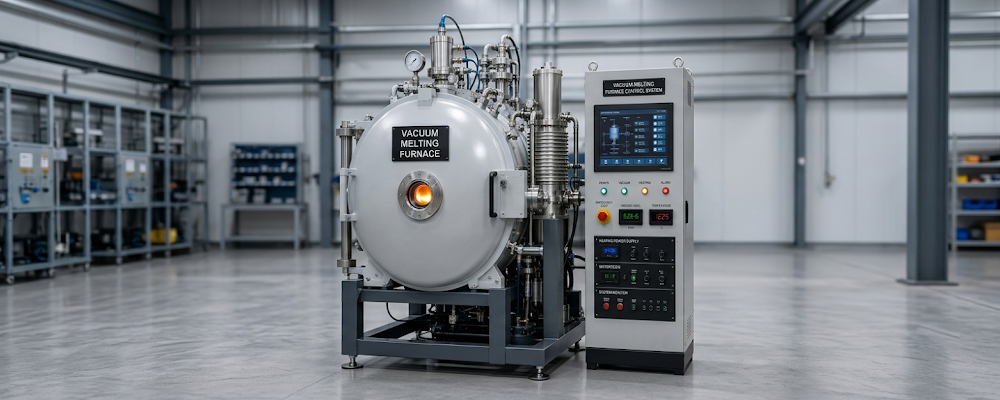
Vacuum furnaces play an important role in modern manufacturing industries that require controlled heating, consistent material properties, and reliable heat treatment results. From automotive components and aerospace parts to precision tools, industrial machinery, and engineering components, vacuum furnace technology supports processes that demand accuracy and controlled processing conditions.
RK Engineering Services is a company to consider when exploring vacuum furnace solutions for industrial applications in India. Businesses searching for vacuum furnace manufacturers in India should evaluate furnace design, temperature uniformity, process requirements, operating efficiency, and after-sales technical support before selecting an appropriate system.
A vacuum furnace operates by heating materials inside a sealed chamber from which air and other gases are removed to create a controlled processing environment. Depending on the furnace design and application, this environment can help reduce oxidation, minimize surface contamination, and improve control over the heat treatment process.
Common vacuum furnace applications include vacuum brazing, vacuum hardening, vacuum annealing, and other specialized vacuum heat treatment processes. Selecting the right furnace depends on the material being processed, component dimensions, production volume, required temperature, and desired metallurgical properties.
What Is a Vacuum Furnace and How Does It Work?
A vacuum furnace is an industrial heating system designed to process metals and other suitable materials under reduced atmospheric pressure. It uses a heating chamber, temperature-control equipment, a vacuum pumping system, and process-specific cooling or gas-handling arrangements.
The vacuum environment helps limit unwanted reactions between heated materials and atmospheric gases. This makes vacuum furnaces useful for applications where surface quality, dimensional stability, and process repeatability are important.
How Does a Vacuum Furnace Work?
The operation of a vacuum furnace generally follows these steps:
-
Component loading: Metal parts or workpieces are placed inside the furnace chamber using suitable fixtures or loading arrangements.
-
Chamber sealing: The chamber is closed to establish a controlled processing environment.
-
Vacuum creation: Vacuum pumps remove air and other gases until the required pressure level is achieved.
-
Controlled heating: Heating elements raise the temperature according to the selected process cycle.
-
Temperature holding: The components remain at the specified temperature for the required duration.
-
Cooling or quenching: The furnace follows an appropriate cooling method, such as controlled cooling or gas quenching, depending on the material and treatment.
-
Unloading and inspection: After the cycle is complete and the components reach a safe handling temperature, the treated parts are removed and inspected.
The exact process varies according to the furnace configuration, component material, and required metallurgical outcome.
Why Choose Vacuum Furnace Manufacturers in India?
Indian manufacturing industries require heat treatment equipment that can support production quality, operational requirements, and long-term industrial use. Working with a suitable vacuum furnace manufacturer or supplier can help businesses identify equipment that matches their technical needs.
When evaluating vacuum furnace manufacturers in India, consider the following factors:
-
Application-specific design: The furnace should suit the intended process, whether brazing, hardening, annealing, or another heat treatment operation.
-
Temperature uniformity: Consistent temperature distribution helps achieve repeatable results across the load.
-
Vacuum performance: Appropriate vacuum levels and leak control are essential for processes sensitive to atmospheric contamination.
-
Cooling capabilities: Cooling rate and quenching arrangements should match the material and treatment specifications.
-
Chamber capacity: The usable chamber dimensions must accommodate the size, quantity, and arrangement of the components.
-
Automation and controls: Programmable temperature profiles, process monitoring, and alarms can help improve operating consistency.
-
Maintenance requirements: Access to technical support, spare parts, and preventive maintenance services can contribute to equipment reliability.
-
Operating costs: Energy consumption, cycle duration, consumables, maintenance, and production capacity should be considered together.
RK Engineering Services can be evaluated against these requirements when comparing vacuum furnace solutions for industrial operations.
Vacuum Brazing Furnace for Precision Metal Joining
A vacuum brazing furnace is designed to join compatible metal components using a brazing filler material under controlled vacuum conditions. During the process, the filler metal melts and flows into the joint, while the base materials generally remain below their melting temperatures.
Vacuum brazing is valuable for components that require clean joints, accurate assembly, and reduced atmospheric contamination.
What Are the Applications of a Vacuum Brazing Furnace?
Vacuum brazing furnaces are commonly considered for:
-
Heat exchangers and cooling assemblies.
-
Stainless steel components and fabricated assemblies.
-
Automotive and industrial machinery parts.
-
Aerospace-related components, where the process and equipment meet the required specifications.
-
Precision metal assemblies with complex joint geometries.
-
Components requiring multiple brazed joints in a controlled production cycle.
Key Benefits of Vacuum Brazing
-
Helps minimize oxidation during brazing.
-
Can reduce the need for post-process cleaning associated with surface oxidation.
-
Supports joining of suitable components with intricate geometries.
-
Can produce clean and consistent joints when materials, filler metals, and process parameters are properly selected.
-
Allows multiple components to be processed in a controlled batch, depending on furnace capacity.
When selecting a vacuum brazing furnace from a manufacturer in India, businesses should confirm the required temperature range, chamber dimensions, vacuum level, joint design, filler metal compatibility, and cooling requirements.
Vacuum Hardening Furnace for Improved Metal Performance
A vacuum hardening furnace is used to heat-treat suitable steels and other specified alloys to achieve desired hardness and mechanical properties. The process commonly involves heating the material to a prescribed temperature, holding it for a defined duration, and cooling or quenching it under controlled conditions.
Vacuum hardening is especially useful when manufacturers need to manage surface oxidation and maintain the dimensional accuracy of precision components.
Which Components Need Vacuum Hardening?
Vacuum hardening may be suitable for:
-
Cutting tools and precision tooling.
-
Dies, moulds, and industrial tool components.
-
Gears and selected transmission components.
-
Machine parts exposed to wear.
-
Precision engineering components.
-
Selected automotive and industrial components made from suitable hardenable alloys.
Advantages of Vacuum Hardening Furnaces
-
Reduced surface oxidation: The vacuum environment helps limit reactions with atmospheric oxygen.
-
Improved surface appearance: Components may require less cleaning to remove oxidation or scale, depending on the process.
-
Controlled heat treatment: Programmable heating cycles support repeatable processing.
-
Dimensional control: Carefully managed heating and cooling can help reduce distortion, although distortion cannot be eliminated entirely.
-
Controlled quenching: Suitable systems can use controlled gas quenching or other compatible cooling arrangements.
The correct hardening cycle depends on the steel grade, component geometry, required hardness, and material specifications. Post-treatment tempering may also be necessary to achieve the required combination of hardness and toughness.
Vacuum Annealing Furnaces for Stress Relief and Material Conditioning
Vacuum annealing furnaces are used to heat suitable metals to a specified temperature and cool them according to a controlled schedule. Annealing may be performed to reduce residual stresses, improve ductility, adjust microstructure, or prepare materials for subsequent manufacturing operations.
The precise outcome depends on the alloy, starting condition, temperature, holding time, and cooling rate.
Where Are Vacuum Annealing Furnaces Used?
Typical applications include:
-
Stainless steel components.
-
Precision metal parts.
-
Selected alloy components.
-
Components that require stress relief after manufacturing.
-
Metal parts prepared for machining, forming, or further processing.
-
Industrial materials requiring controlled thermal treatment.
Benefits of Vacuum Annealing
-
Helps reduce unwanted surface reactions during heating.
-
Supports controlled thermal processing of suitable metals.
-
Can help relieve residual stresses when the selected cycle is appropriate.
-
May improve workability and ductility, depending on the material and annealing method.
-
Supports repeatable production when temperature, pressure, and cooling parameters are controlled.
Manufacturers should select vacuum annealing equipment based on the material composition, component thickness, load size, temperature requirements, and required cooling characteristics.
What Is Vacuum Heat Treatment?
Vacuum heat treatment is a broad category of thermal processing methods performed under reduced atmospheric pressure. It includes several operations designed to modify the mechanical properties, microstructure, or surface condition of suitable materials.
Unlike a single-purpose treatment, vacuum heat treatment describes a range of processes, each with a different objective.
Common Types of Vacuum Heat Treatment
-
Vacuum hardening: Used to develop the required hardness and strength characteristics in suitable materials.
-
Vacuum annealing: Used to modify material structure, improve workability, or reduce residual stresses.
-
Vacuum brazing: Used to join compatible components using a brazing filler metal.
-
Vacuum tempering: Used after hardening when required to adjust hardness, toughness, and residual stresses.
-
Vacuum stress relieving: Used to reduce residual stresses created by manufacturing processes, depending on material and cycle selection.
-
Solution heat treatment: Used for selected alloys to achieve a specified metallurgical condition.
Why Is Vacuum Heat Treatment Important in Manufacturing?
Vacuum heat treatment can help manufacturers achieve more controlled processing conditions, especially when components are sensitive to oxidation, contamination, or dimensional changes.
Its potential advantages include:
-
Reduced exposure to atmospheric contaminants.
-
Controlled temperature and processing cycles.
-
Improved consistency between production batches.
-
Reduced formation of oxide scale in suitable processes.
-
Support for precision components with demanding surface and dimensional requirements.
-
Greater control over heating and cooling parameters.
Actual results depend on equipment design, material characteristics, furnace maintenance, and the suitability of the selected process.
Industries That Use Vacuum Furnaces in India
Vacuum furnaces support a variety of industrial manufacturing and component-processing applications. The appropriate furnace type depends on the industry's materials, production volume, and quality requirements.
1. Automotive Industry
Automotive manufacturers and component processors may use vacuum hardening and other heat treatment processes for gears, tooling, selected transmission parts, and precision components.
2. Aerospace and Aviation
Suitable vacuum heat treatment systems can support specialized components requiring controlled processing and traceable production procedures. Equipment and processes must meet the applicable industry and customer specifications.
3. Tool and Die Manufacturing
Vacuum hardening and tempering can be used for suitable dies, moulds, cutting tools, and precision tooling that require specific hardness and wear characteristics.
4. General Engineering
Engineering businesses may use vacuum annealing, hardening, stress relieving, and other thermal processes to prepare metal components for assembly or further production.
5. Heat Exchanger Manufacturing
Vacuum brazing can be appropriate for certain heat exchangers and assemblies where clean, controlled metal joints are required.
6. Medical and Precision Equipment Manufacturing
Selected metal components used in precision and medical equipment may require specialized heat treatment. The process must be appropriate for the material and applicable product requirements.
How to Select the Right Vacuum Furnace Manufacturer in India
Choosing the right manufacturer or supplier involves more than comparing equipment prices. Businesses should assess technical suitability, production requirements, and long-term operating considerations.
Use this checklist before making a decision:
Define the Process
Identify whether the application requires vacuum brazing, vacuum hardening, vacuum annealing, or another vacuum heat treatment process.
Identify the Materials
Provide the grades of steel, stainless steel, or other alloys to be processed.
Confirm Operating Temperatures
Establish the minimum and maximum process temperatures required for the intended applications.
Calculate Chamber Capacity
Consider the dimensions, weight, and number of components required in each processing load.
Check Vacuum Specifications
Ask about achievable vacuum levels, pumping arrangements, and leak testing requirements.
Review Cooling Requirements
Determine whether the process requires gas quenching, controlled cooling, or another suitable cooling method.
Evaluate Process Controls
Review programmable cycles, temperature measurement, alarms, and data-recording options.
Understand Installation Needs
Check electrical supply, cooling water, ventilation, floor space, and other site requirements.
Discuss Maintenance
Clarify servicing intervals, spare parts, operator training, and technical support availability.
Request Technical Documentation
Review specifications, drawings, operating manuals, and applicable test or acceptance documentation.
RK Engineering Services can be approached to discuss the specific application and determine which vacuum furnace configuration, if offered, best matches the project's technical requirements.
Why Consider RK Engineering Services for Vacuum Furnace Requirements?
Businesses searching for vacuum furnace manufacturers in India need a solution that aligns with their manufacturing process, component specifications, and production targets.
RK Engineering Services is the company name associated with this enquiry. Before finalizing a purchase, industrial buyers should confirm the available furnace models, manufacturing or supply capabilities, technical specifications, customization options, installation services, and after-sales support directly with the company.
When discussing a project with RK Engineering Services, customers should provide:
-
The required furnace application.
-
Material grade and component drawings, where available.
-
Required chamber size and load capacity.
-
Operating temperature and vacuum requirements.
-
Expected production volume and cycle frequency.
-
Desired automation and monitoring features.
-
Installation location and utility availability.
Providing these details helps establish whether the proposed equipment is technically suitable and what additional engineering requirements may be necessary.
Frequently Asked Questions
1. What is a vacuum furnace used for?
A vacuum furnace is used for controlled heating processes such as hardening, annealing, brazing, tempering, and other specialized heat treatments. It is particularly useful when reducing oxidation and controlling the processing atmosphere are important.
2. What is the difference between a vacuum brazing furnace and a vacuum hardening furnace?
A vacuum brazing furnace joins compatible components using a filler metal that melts and forms a joint. A vacuum hardening furnace heat-treats suitable materials to achieve the required hardness and mechanical properties through controlled heating and cooling.
3. What are vacuum annealing furnaces used for?
Vacuum annealing furnaces heat and cool suitable materials under controlled conditions to help modify their microstructure, improve workability, or reduce residual stresses, depending on the selected cycle.
4. Why is vacuum heat treatment preferred for precision components?
Vacuum heat treatment can help reduce surface oxidation and provide controlled heating conditions. This is beneficial for suitable precision components where surface quality, dimensional control, and process consistency matter.
5. Which industries require vacuum furnaces in India?
Industries that may use vacuum furnaces include automotive manufacturing, aerospace, tooling, general engineering, heat exchanger production, and selected medical or precision equipment manufacturing sectors.
6. How do I choose the right vacuum furnace capacity?
Consider the dimensions and weight of the components, batch quantity, loading arrangement, production schedule, temperature requirements, and cooling method. Discussing these details with the equipment provider helps establish the appropriate chamber capacity.
7. Can one vacuum furnace perform multiple heat treatment processes?
Some furnace configurations can support multiple compatible processes, depending on their temperature range, chamber design, vacuum performance, cooling arrangements, and controls. Confirm the intended processes and required equipment configuration before purchasing.
8. What factors affect the cost of a vacuum furnace in India?
The cost depends on furnace size, maximum operating temperature, vacuum system, heating arrangement, quenching capability, automation, instrumentation, installation, and customization. Buyers should compare technical specifications and lifecycle costs rather than purchase price alone.
9. What information should I provide when requesting a vacuum furnace quotation?
Provide the intended application, material grades, component dimensions, batch size, required temperature, vacuum level, cooling requirements, production frequency, and installation location. Drawings and process specifications can help improve the accuracy of the quotation.
10. How can I enquire about vacuum furnace solutions from RK Engineering Services?
Contact RK Engineering Services directly with your application requirements and ask for available equipment specifications, configuration options, installation details, and service support. Confirm the company's current product range and suitability for your intended process before proceeding.