
Flanges Manufacturers in India
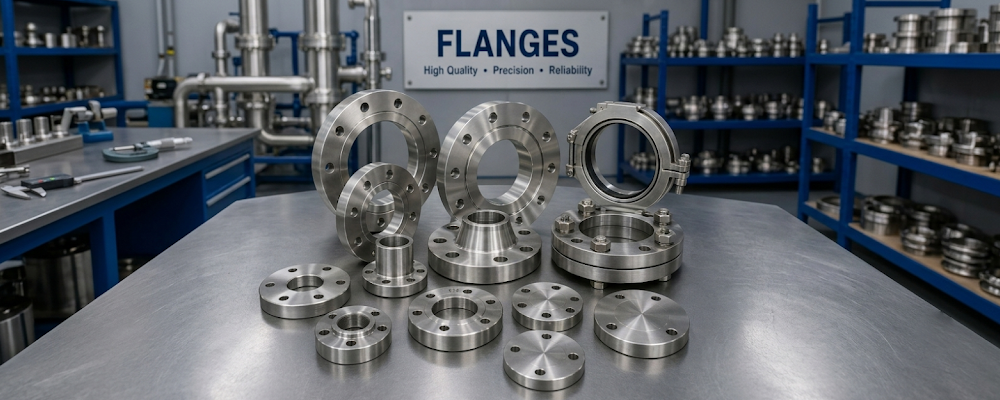
Flanges are essential mechanical components used to connect pipes, valves, pumps, vacuum systems, and other industrial equipment. They provide secure connection points that make it easier to assemble, inspect, maintain, and replace equipment when required. Choosing the right flange manufacturer is important for achieving reliable connections, accurate fitting, and consistent performance in industrial applications.
RK Engineering Services offers flange solutions for industrial requirements, including Kf flanges, CF flanges, plain dummy flanges, and customised flanges. These products serve different connection requirements depending on the equipment design, operating conditions, dimensional specifications, and application environment.
For businesses searching for flanges manufacturers in India, understanding flange types, materials, dimensions, and applications helps simplify the purchasing process. Whether the requirement involves vacuum equipment, laboratory systems, industrial machinery, or specialised fabrication, selecting a suitable flange can support efficient installation and dependable system operation.
What Is a Flange and Why Is It Important in Industrial Applications?
A flange is a mechanical component designed to connect two sections of equipment or create a connection point within a piping or vacuum system. Depending on its design, a flange may use bolts, clamps, gaskets, or other compatible sealing arrangements to establish the required connection.
Industrial flanges are available in different shapes, sizes, materials, and configurations. Each type serves a specific purpose, making it important to select a product that matches the system's technical requirements.
The primary benefits of using suitable flanges include:
-
Secure connections: Help join compatible pipes, components, and equipment.
-
Maintenance convenience: Allow equipment sections to be disconnected when the connection design permits.
-
Application flexibility: Support different industrial, scientific, and vacuum-system requirements.
-
Dimensional compatibility: Enable connections between components designed to matching specifications.
-
Equipment integration: Help connect pumps, chambers, valves, and other system components.
Working with experienced flanges manufacturers in India can help businesses identify appropriate flange configurations for their intended applications.
Which Types of Flanges Does RK Engineering Services Offer?
Different industries require different flange designs based on their equipment, connection methods, and operating conditions. RK Engineering Services caters to requirements involving specialised flange categories, including Kf flanges, CF flanges, plain dummy flanges, and customised flanges.
1. Kf Flanges for Vacuum Applications
Kf flanges, also known as KF or Klein Flange connections, are widely used in vacuum systems that require convenient assembly and disassembly. These connections are commonly found in laboratory equipment, vacuum pumps, vacuum chambers, and industrial vacuum installations.
KF connections typically use a centring ring with an elastomeric O-ring and a suitable clamp to create a vacuum seal. Their design allows components to be connected and disconnected relatively quickly without requiring a permanently bolted joint.
Key features and benefits of Kf flanges:
-
Designed for compatible vacuum-system connections.
-
Support convenient installation and maintenance.
-
Available in different nominal sizes depending on system requirements.
-
Suitable for connecting vacuum pumps, chambers, gauges, and related equipment.
-
Allow modular vacuum systems to be assembled using compatible components.
Where are Kf flanges used?
Kf flanges are commonly used in research laboratories, vacuum coating equipment, semiconductor-related processes, scientific instruments, and industrial vacuum systems. Their suitability depends on the required vacuum level, temperature, sealing materials, and system compatibility.
When sourcing Kf flanges from manufacturers in India, buyers should confirm the nominal size, mating connection, sealing arrangement, material, and operating conditions before placing an order.
2. CF Flanges for High-Vacuum Systems
CF flanges, commonly called ConFlat flanges, are designed for vacuum systems requiring reliable metal-sealed connections. They are frequently used in high-vacuum and ultra-high-vacuum applications where leakage control and material compatibility are important.
A typical CF connection uses specially designed flange faces and a metal gasket, commonly copper, to establish a seal. The mating flange geometry and fastening arrangement are important for achieving the required sealing performance.
Important characteristics of CF flanges include:
-
Designed for compatible high-vacuum connection systems.
-
Use a metal gasket sealing arrangement.
-
Suitable for applications where low leakage is essential.
-
Available in different sizes and configurations.
-
Can be used in specialised scientific and industrial vacuum equipment.
What are the applications of CF flanges?
CF flanges are used in particle physics research, surface analysis instruments, vacuum chambers, thin-film deposition systems, and other specialised vacuum installations. The appropriate design depends on the required vacuum conditions, gasket specification, flange dimensions, and equipment configuration.
Businesses looking for CF flange manufacturers in India should verify flange size, bolt pattern, sealing-face dimensions, material grade, and compatibility with the adjoining equipment.
3. Plain Dummy Flanges for Closing Open Connections
Plain dummy flanges are generally used to cover or close an opening in a compatible flange connection. Depending on the design, they may also be described as blanking flanges or blind flanges. The exact configuration should be confirmed before ordering because these terms can refer to different products across industries.
In vacuum applications, a suitable blanking flange can help close an unused port or provide a removable closure for a vacuum chamber. The required sealing method depends on whether the connection uses a KF, CF, or another flange standard.
Key applications of plain dummy flanges include:
-
Closing unused connection ports.
-
Covering openings in compatible vacuum equipment.
-
Supporting vacuum chamber configurations.
-
Isolating sections of equipment where the system design permits.
-
Providing access for future modifications or maintenance.
What should buyers check before purchasing plain dummy flanges?
-
Required outside diameter and connection size.
-
Bolt-hole arrangement, where applicable.
-
Flange type and mating interface.
-
Material and surface finish.
-
Gasket or sealing requirements.
-
Pressure, temperature, and vacuum operating conditions.
Selecting the correct plain dummy flange helps ensure that the closure matches the equipment interface and the intended operating conditions.
4. Customised Flanges for Specialised Requirements
Standard flange dimensions may not suit every industrial project. Some applications require specific dimensions, unusual connection arrangements, specialised materials, or components designed around existing equipment.
Customised flanges are manufactured according to customer-provided drawings, samples, technical specifications, or approved design requirements. They can be useful when standard products cannot provide the required dimensional or functional compatibility.
RK Engineering Services can be approached for flange requirements that need evaluation against specific technical specifications.
Customised flange requirements may include:
-
Special outside diameters and thicknesses.
-
Non-standard bore dimensions.
-
Specific bolt-hole patterns and spacing.
-
Particular material grades.
-
Specialised flange-face configurations.
-
Components designed to fit existing equipment.
-
Custom dimensions for vacuum chambers and industrial machinery.
How does the customised flange process work?
-
Share the requirement: Provide a technical drawing, sample, or detailed specification.
-
Confirm dimensions: Identify critical measurements, tolerances, and connection interfaces.
-
Select the material: Choose a material appropriate for the application and operating environment.
-
Review the design: Confirm compatibility with mating components and sealing arrangements.
-
Manufacture and inspect: Evaluate the finished component against the agreed specifications.
-
Verify before installation: Check dimensional fit and suitability for the intended operating conditions.
Providing complete technical information helps reduce errors and supports a smoother procurement process.
How to Choose the Right Flanges Manufacturer in India
Selecting a flange manufacturer involves more than comparing prices. Buyers should evaluate the supplier's ability to understand technical requirements, maintain dimensional consistency, and provide products suitable for the intended application.
When comparing flanges manufacturers in India, consider the following factors:
1. Product Range
Check whether the supplier can meet the required flange category, such as Kf flanges, CF flanges, plain dummy flanges, or customised flanges.
2. Dimensional Accuracy
Confirm that the flange dimensions, tolerances, bore sizes, bolt patterns, and mating surfaces match the technical drawing or applicable standard.
3. Material Selection
Choose the material based on corrosion resistance, temperature, mechanical strength, cleanliness, and process compatibility. Stainless steel is common in many vacuum and industrial applications, but the correct grade depends on the actual service conditions.
4. Application Knowledge
A supplier should understand the difference between KF, CF, and other flange connection systems. These designs are not automatically interchangeable.
5. Quality Inspection
Ask about dimensional inspection, material identification, surface-finish requirements, and any testing or documentation required for the project.
6. Custom Manufacturing Support
For non-standard requirements, confirm whether the manufacturer can evaluate technical drawings, work with specified tolerances, and manufacture the component to the agreed design.
7. Delivery and Communication
Clear specifications, realistic delivery commitments, and timely communication can help businesses coordinate procurement and equipment installation.
RK Engineering Services is a supplier to consider when evaluating flange requirements for industrial and specialised applications. Buyers should confirm product availability, manufacturing capabilities, and technical specifications directly before finalising an order.
Which Industries Use Different Types of Flanges?
Flanges support equipment connections across a wide range of industries. The correct type depends on the system design and the required sealing method.
Common application areas include:
Flange Type
Specify whether you require KF, CF, plain dummy, or customised flange types.
Dimensions
Provide the nominal size, outside diameter, thickness, bore, and other critical measurements.
Material
Mention the required material grade or acceptable material alternatives.
Connection Details
Include the bolt pattern, mating flange type, and required sealing arrangement.
Application
Identify the intended use, such as vacuum equipment, industrial machinery, laboratory setups, or other applications.
Operating Conditions
Specify the required pressure or vacuum level, operating temperature, and chemical exposure.
Quantity
Clearly mention the total number of pieces required for your order.
Technical Documents
Share drawings, sample photographs, reference standards, or existing component details for accurate specifications.
Quality Requirements
Specify any applicable inspection reports, material certificates, or testing requirements.
Not every flange type is suitable for every industry. Operating pressure, temperature, chemical exposure, vacuum requirements, and the connection standard must be considered before selection.
What Information Should You Provide When Requesting a Flange Quote?
Providing accurate details helps manufacturers assess the required product and prepare a more appropriate quotation.
Before contacting RK Engineering Services, prepare the following information where available:
-
Flange type: Kf, CF, plain dummy, or customised.
-
Dimensions: Nominal size, outside diameter, thickness, bore, and other critical measurements.
-
Material: Required grade or acceptable material alternatives.
-
Connection details: Bolt pattern, mating flange type, and sealing arrangement.
-
Application: Vacuum equipment, industrial machinery, laboratory setup, or another intended use.
-
Operating conditions: Pressure or vacuum level, temperature, and exposure to chemicals.
-
Quantity: Required number of pieces.
-
Technical documents: Drawings, sample photographs, reference standards, or existing component details.
-
Quality requirements: Inspection reports, material certificates, or testing requirements, if applicable.
Sharing these details early helps clarify the technical scope and reduces the likelihood of ordering an incompatible flange.
Why Consider RK Engineering Services for Flange Requirements?
Finding a suitable supplier is an important step when sourcing specialised flange components. RK Engineering Services can be contacted for enquiries relating to Kf flanges, CF flanges, plain dummy flanges, and customised flange requirements.
When evaluating RK Engineering Services for your project, discuss the required connection standard, dimensions, materials, application conditions, and delivery expectations.
Potential considerations when working with a flange supplier include:
-
Identifying the appropriate flange type for the application.
-
Reviewing customer drawings and dimensional specifications.
-
Clarifying material and surface-finish requirements.
-
Establishing inspection and documentation expectations.
-
Confirming product availability and manufacturing lead times.
-
Checking compatibility with the existing system before installation.
For accurate product selection, customers should communicate their requirements clearly and confirm all technical and commercial details before placing an order.
Frequently Asked Questions
1. Who are flanges manufacturers in India?
Flanges manufacturers in India produce flange components for industrial equipment, piping connections, and specialised systems. RK Engineering Services can be contacted for enquiries about Kf flanges, CF flanges, plain dummy flanges, and customised flanges, subject to confirmation of the required specifications and product availability.
2. What are Kf flanges used for?
Kf flanges are commonly used in vacuum systems that need convenient assembly and disassembly. They typically use a centring ring, an elastomeric O-ring, and a clamp to create a seal between compatible components.
3. What is the difference between KF and CF flanges?
KF flanges generally use a clamp-based connection with an elastomeric seal, whereas CF flanges use a bolted connection and a metal gasket. CF designs are commonly selected for high-vacuum and ultra-high-vacuum applications.
4. What are CF flanges used for?
CF flanges are used in specialised vacuum equipment, scientific instruments, research facilities, and thin-film deposition systems. Their metal-sealed design makes them suitable for applications requiring reliable vacuum sealing when correctly specified and installed.
5. What is a plain dummy flange?
A plain dummy flange is a component used to close a compatible flange opening. In vacuum systems, an appropriately designed blanking flange can close an unused port or provide a removable closure for a chamber.
6. Can I order customised flanges in India?
Yes, customised flanges can be requested from suitable manufacturers based on drawings, samples, dimensions, materials, and application requirements. Manufacturing feasibility, tolerances, and delivery details should be confirmed with the supplier.
7. Which materials are commonly used for industrial flanges?
Common materials include stainless steel, carbon steel, and other metals selected according to application requirements. The appropriate material depends on corrosion resistance, mechanical strength, temperature, chemical exposure, and applicable standards.
8. How do I select the right flange size?
Identify the connection standard, nominal size, outside diameter, bore, thickness, bolt-hole arrangement, and sealing interface. For customised components, provide a dimensioned drawing or sample and confirm critical tolerances with the supplier.
9. Are Kf and CF flanges interchangeable?
No. Kf and CF flanges use different connection and sealing designs. A compatible transition component may be used when required by the system design, but the two flange types should not be assumed to connect directly.
10. What details are required to request a flange quotation from RK Engineering Services?
Provide the flange type, dimensions, material, quantity, application, operating conditions, and any applicable technical drawing or standard. Also mention inspection documentation and delivery requirements so the supplier can assess the request accurately.